
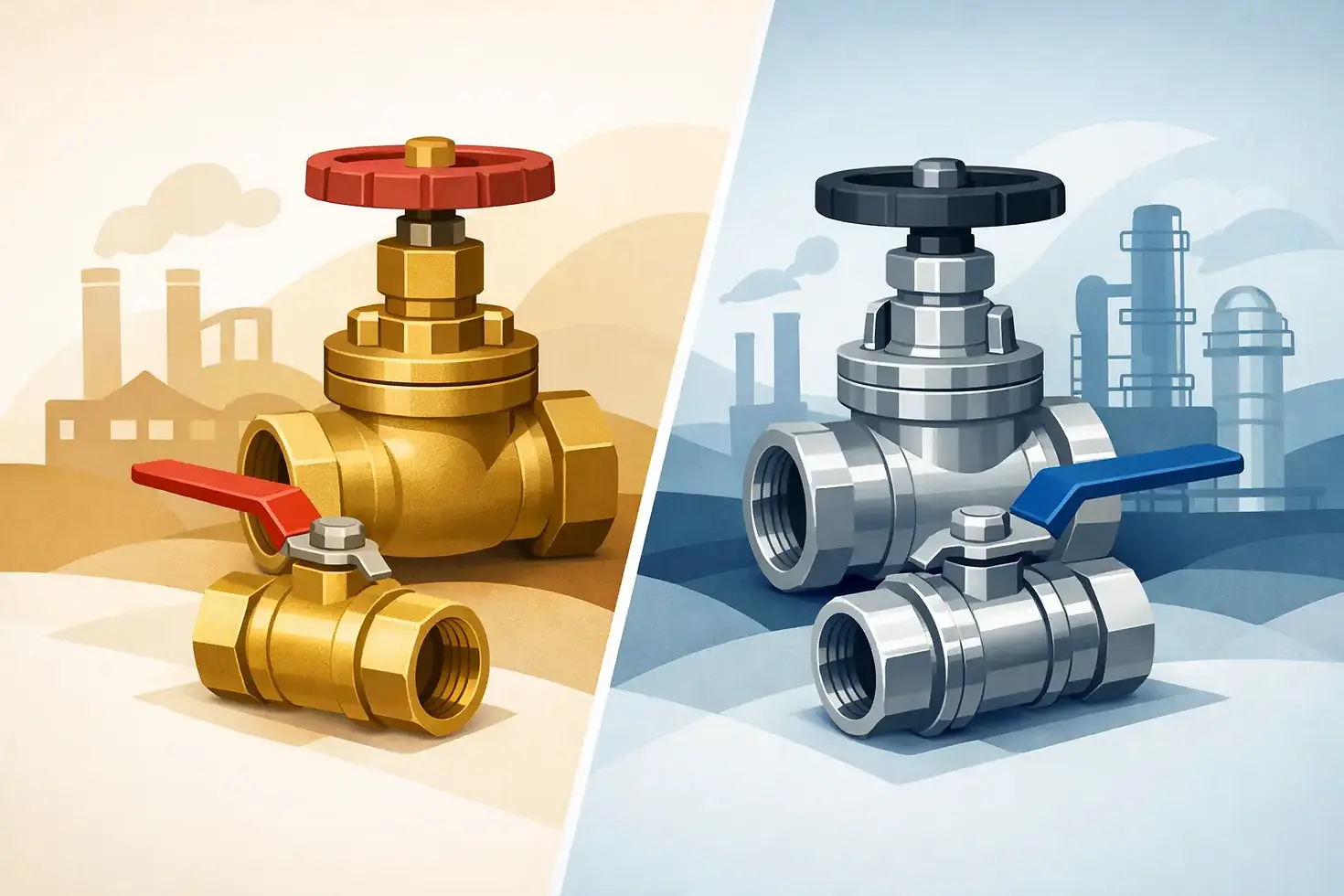
Brass Valves vs Stainless Steel for Industry
A valve body that performs well in a clean water line can become an expensive failure point when the same design is moved into chlorinated water, a coastal plant room or an aggressive process fluid. The choice between brass valves vs stainless steel is therefore not simply a question of which material is stronger. It affects service life, machining cost, sealing performance, compliance, lead times and the total cost of the finished assembly.
For many plumbing, metering, pump and fire protection applications, brass remains the practical commercial choice. Stainless steel becomes the better option where fluid chemistry, temperature, hygiene requirements or external exposure place greater demands on the material. The correct decision starts with the operating conditions, then considers the component design and supply requirements.
Brass valves vs stainless steel: the core difference
Brass is a copper-zinc alloy valued for machinability, dimensional consistency and resistance to ordinary water corrosion. It is widely used for ball valves, gate valves, hose fittings, meter connections and threaded components because complex forms can be forged, cast and machined efficiently at volume. Brass also provides reliable thread formation and good compatibility with common seals used in water systems.
Stainless steel is an iron-based alloy containing chromium, often with nickel, molybdenum or other elements depending on grade. Its corrosion resistance comes from a thin passive surface layer that reforms when damaged in suitable conditions. Common valve materials include 304 and 316 stainless steel, with 316 generally providing improved resistance to chlorides because of its molybdenum content.
This distinction matters because neither label is a full specification. A brass valve may be made from a lead-free, low-lead or dezincification-resistant alloy. A stainless steel valve may be 304, 316 or a lower-cost grade with materially different performance. Procurement specifications should identify the alloy, relevant standard, pressure rating, connection type and test requirements rather than accepting a general material description.
Corrosion resistance depends on the service environment
For clean, non-aggressive water, quality brass has a long record of dependable performance. It does not rust, handles normal humidity well and is suitable for a wide range of domestic, commercial and industrial water applications. This makes it a sound choice where cost control and high-volume production are priorities.
However, brass can be vulnerable to dezincification in certain waters. This selective corrosion process removes zinc from the alloy, leaving a porous copper-rich structure that can weaken the valve body or threaded areas. Hot water, high chloride content, soft or acidic water and stagnant conditions can increase the risk. Where these conditions are expected, a dezincification-resistant brass alloy should be specified rather than relying on standard brass.
Stainless steel is often selected for difficult media, outdoor exposure and applications where corrosion margin is critical. Grade 316 is commonly considered for chloride-containing environments, chemical handling and coastal locations, although it is not immune to chloride attack. Crevice corrosion and pitting can still occur where deposits, stagnant water or poorly designed joints allow chlorides to concentrate.
The practical lesson is simple: stainless steel offers broader corrosion resistance, but it is not a universal solution. Brass can be the more reliable and economical material in conventional water duty when the correct alloy is used. A water analysis, operating temperature and cleaning regime should guide the selection.
Pressure, temperature and mechanical performance
Valve pressure capacity is determined by more than body material. Wall thickness, forging or casting quality, thread design, seat construction, stem arrangement and assembly control all influence the final rating. A well-engineered brass valve can safely serve demanding water and air systems within its designed pressure range.
Stainless steel generally provides higher tensile strength and performs more confidently at elevated temperatures. This makes it attractive for high-pressure process systems, steam-adjacent equipment and applications subject to greater mechanical loading. It is also less likely than brass to suffer from certain forms of stress-related damage in severe environments.
That said, higher strength can bring higher manufacturing cost. Stainless steel is harder to machine than brass, increasing tool wear and cycle times. For an OEM requiring thousands of threaded valve bodies or precision fittings, this difference has a direct effect on piece price. Brass machines cleanly, supports efficient high-volume production and can achieve tight tolerances with less processing effort.
Temperature also changes the decision. Standard brass valves are widely used in hot and cold water applications, but sustained high temperatures can affect material strength and seal performance. Stainless steel may be preferable where the full assembly faces continuous heat, thermal cycling or severe pressure-temperature combinations. The seal material must be assessed alongside the metal body, as an unsuitable elastomer can limit service life before the valve body does.
Cost is more than the initial unit price
Brass is usually more cost-effective for standard water valves, fittings and mechanical components. Its manufacturing efficiency can outweigh fluctuations in copper and zinc prices, particularly when components require multiple drilled ports, internal threads or detailed machined features. Forged brass also offers a dependable route to dense, consistent parts for high-volume supply.
Stainless steel has a higher material and processing cost, especially for 316. The additional spend may be justified where failure consequences are high, replacement access is poor or corrosion exposure would shorten the life of a brass component. In these cases, buying the cheaper valve can create a larger maintenance cost later.
Buyers should compare total installed cost rather than material price alone. Include expected service life, inspection intervals, replacement labour, downtime risk, certification requirements and batch consistency. For standardised OEM products, it is also worth considering whether the chosen material can be sourced repeatedly at the required volume without unnecessary cost volatility.
Application fit: where each material is commonly used
Brass is frequently the preferred choice for water metering connections, domestic and commercial plumbing valves, pump accessories, fire hose fittings, sprinkler components and general-purpose pipe fittings. Its ease of machining makes it particularly suitable for custom bodies with threaded ports, sensor connections or compact internal passages.
Stainless steel is more common in food and beverage equipment, chemical processing, marine installations, pharmaceutical systems, specialist water treatment and exposed industrial plant. It can also be appropriate for OEM machinery where cleanliness, washdown resistance or a stainless-steel system specification requires material consistency.
Fire protection requires closer attention than a simple material preference. Brass and bronze components are widely used across sprinkler and hose systems, but the final choice must match the applicable approval requirements, working pressure, environment and connection standard. A valve that is mechanically suitable is not automatically acceptable for a certified fire protection assembly.
For potable water products, material compliance is equally important. Lead content restrictions and local approval requirements vary by market. Specify the required standard early, particularly for export programmes, so that alloy selection, traceability and testing are built into production rather than added after samples have been approved.
Design and manufacturing details that affect performance
Material selection cannot correct a weak valve design. Internal flow path, seat geometry, stem sealing, thread engagement and surface finish all influence leakage resistance and operating life. For brass valves, sound forging or controlled casting and accurate machining are central to reliable pressure performance. For stainless steel valves, weld quality, passivation where relevant and avoidance of crevices deserve particular attention.
Galvanic compatibility should also be reviewed. Joining brass, stainless steel, copper, aluminium and galvanised steel within one wet system can create conditions for galvanic corrosion, particularly where water chemistry is conductive. The risk depends on the metals involved, their surface areas, electrical contact and electrolyte exposure. Correct joint design, isolation and system-level material planning are more effective than selecting one valve material in isolation.
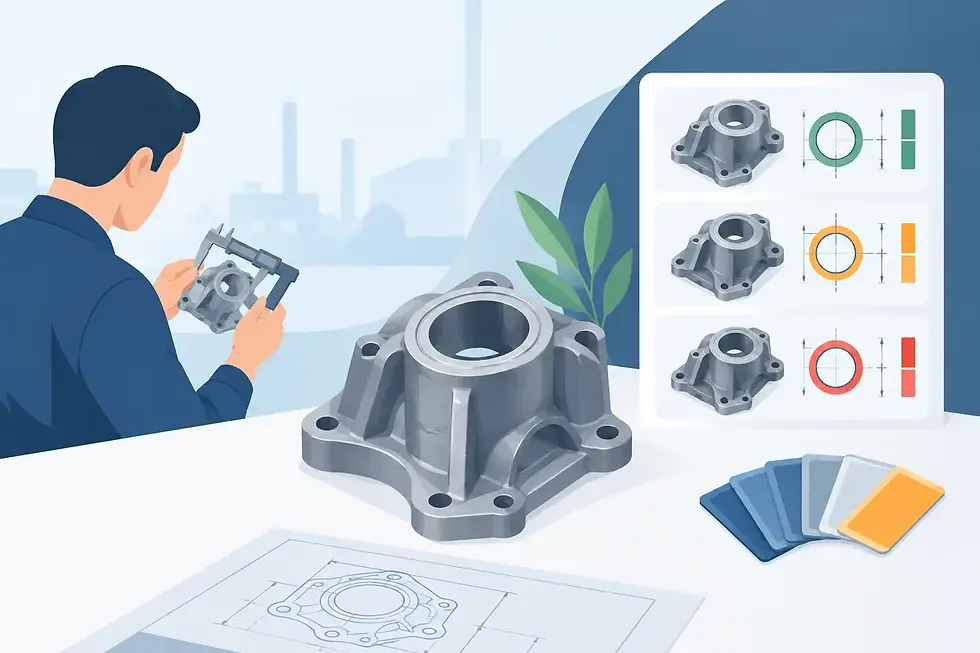
For custom components, provide the supplier with the application medium, maximum working pressure and temperature, connection standard, required alloy, seal material, drawing tolerances and test method. These details allow the manufacturer to recommend a practical production route and avoid unnecessary machining or unsuitable substitutions. Tan Tasa UK supports this approach with precision brass and bronze valve production for standard and OEM requirements.
A practical procurement decision
Choose brass when the application involves normal water duty, compatible media, conventional pressure and temperature limits, and a strong need for cost-efficient volume production. Upgrade to dezincification-resistant brass where water chemistry creates a known risk. This route is often the best balance of durability, machinability and commercial value.
Choose stainless steel when the system faces aggressive chemicals, demanding hygiene standards, high chloride exposure, elevated temperatures or a project specification that requires stainless construction. Confirm the grade rather than assuming all stainless steel provides equivalent protection. In many cases, 304 and 316 will lead to very different lifecycle outcomes.
The strongest valve specification is not the one with the most expensive material. It is the one that matches the fluid, environment, duty cycle, approval requirements and expected production volume. Getting those conditions defined before quotation protects both performance in service and cost control across the supply programme.


Comments