

Brass Casting for Plumbing: What Buyers Need
A plumbing component rarely fails because of one dramatic mistake. More often, problems begin with small inconsistencies in material, wall thickness, machining allowance or thread accuracy. That is why brass casting for plumbing matters well before a valve body, fitting or meter part reaches installation. For buyers and engineers, the casting process has a direct effect on service life, sealing performance, production cost and supply reliability.
In plumbing applications, brass remains a practical material choice because it balances corrosion resistance, machinability and strength. It performs well across a wide range of water-related uses, from valve bodies and pipe fittings to meter housings and pump components. But not all brass castings perform the same way. The difference usually comes down to alloy selection, process control and how closely the supplier works to the drawing.
Why brass casting for plumbing remains a strong option
For many plumbing systems, the material decision is commercial as much as technical. Brass offers good pressure resistance, reliable machinability and a finish that supports accurate sealing surfaces and threaded features. It is also well suited to parts that need post-casting machining, whether for ports, threads, bores or valve seats.
Compared with some alternative metals, brass gives manufacturers more flexibility when a part needs both casting complexity and machining precision. Stainless steel can offer higher corrosion resistance in certain environments, but it is typically more difficult and costly to machine. Plastic can reduce weight and material cost, but it may not deliver the same long-term mechanical performance in demanding installations. Bronze can be an excellent choice in some conditions, especially where wear resistance is critical, yet brass often remains the more economical option for high-volume plumbing components.
That balance explains why brass is still widely specified across water control and distribution products. When the alloy and process are properly matched to the application, it delivers dependable performance at a competitive unit cost.
What buyers should assess in brass plumbing castings
The first question is not simply whether a supplier can cast brass. It is whether they can produce the right brass component consistently, at the required volume, with the necessary dimensional and material control.
Alloy grade is a good place to start. Plumbing parts may need to meet specific mechanical, corrosion or regulatory requirements depending on the target market and end use. A casting supplier should be clear about the alloy being used, how melts are controlled and how material consistency is verified. If this is vague at quotation stage, it rarely improves later.
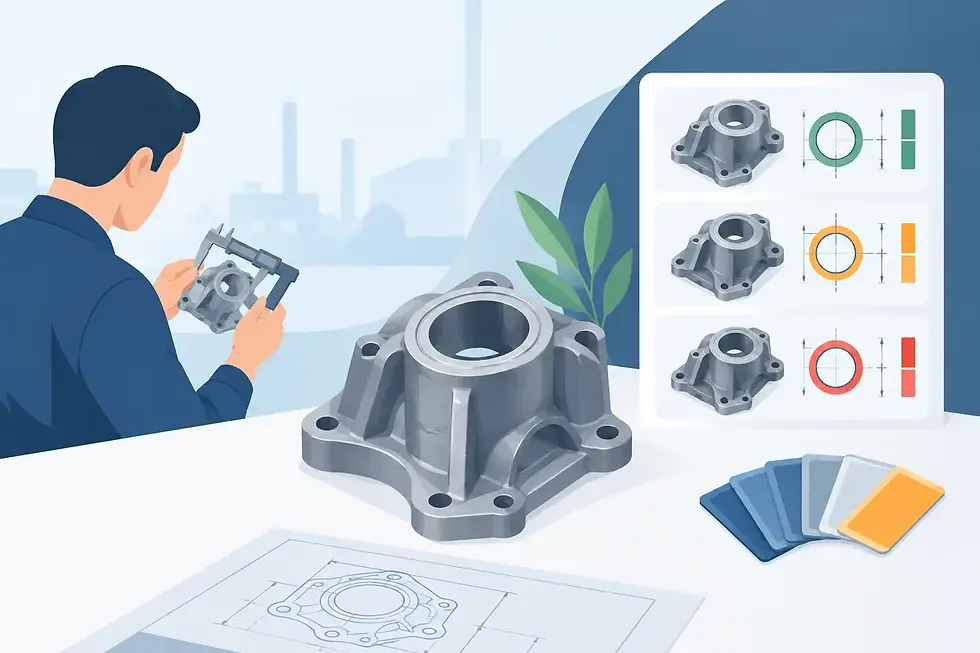
Dimensional repeatability matters just as much. Cast parts are not final parts in many plumbing applications. They often move on to machining, assembly, pressure testing and plating or finishing. If the casting is unstable dimensionally, the cost of downstream operations rises quickly through extra machining time, scrap or rejected assemblies.
Surface quality is another practical indicator. A plumbing casting does not need cosmetic perfection unless appearance is part of the specification, but it does need sound metal, controlled porosity and clean critical areas. Surface issues can point to deeper process weaknesses, especially in pressure-containing components.
Then there is production discipline. Buyers should want to know how tooling is managed, how first-off approvals are handled and what in-process inspection actually looks like. A low quote on paper can become expensive if the supplier struggles with batch consistency or long correction cycles.
Process control is where value is won or lost
A well-run casting operation reduces risk in ways that do not always show up in the initial piece price. Stable moulding practice, controlled pouring, disciplined trimming and sensible machining allowances all contribute to a part that moves efficiently through production.
For plumbing components, this is especially important because many parts have functional features that cannot absorb much variation. Port geometry, thread alignment, seat areas and wall sections all influence pressure performance and assembly fit. When those basics drift, the result is not just scrap at the casting stage. It can mean failed pressure tests, leakage in service or delays in customer production.
This is where an experienced manufacturing partner adds value. Strong suppliers do more than pour to print. They review part geometry for castability, flag sections that may create shrinkage or porosity risk, and recommend adjustments that protect function without adding unnecessary cost. That matters for both standard product lines and OEM components.
In practice, the best results come from early alignment between buyer and supplier. If tolerances, machining references, critical surfaces and test requirements are defined clearly from the start, brass casting becomes a controlled industrial process rather than a repeated exercise in correction.
Common plumbing applications and their demands
Brass castings appear across a broad range of plumbing and water system products. Valve bodies are one of the most common examples, where pressure integrity and machinable sealing surfaces are essential. Pipe fittings and connectors require accurate forms and dependable thread quality after machining. Water meter bodies need dimensional control, material consistency and repeatable production over large volumes.
Pump and fire protection components bring their own demands. Some designs prioritise mechanical strength and wall integrity, while others require more complex internal geometry. In each case, the casting process must support the actual service condition rather than simply replicate a shape.
That is why application context matters. A part used in a domestic plumbing assembly may not face the same conditions as one fitted into a commercial water system or industrial pump line. Pressure range, water quality, installation environment and regulatory expectations all affect the right specification. Buyers who treat all brass plumbing castings as interchangeable often encounter avoidable quality or cost issues later.
Cost matters, but total cost matters more
Procurement teams are right to focus on pricing. Brass content, energy use, machining time and tooling all shape the final cost. Yet the cheapest casting is not always the lowest-cost supply option once quality and lead-time performance are factored in.
A supplier with disciplined production and reliable inspection can reduce waste across the full purchasing cycle. Fewer dimensional issues mean less incoming inspection trouble. Better casting consistency means smoother machining and assembly. Clear communication means fewer delays when revisions or approvals are needed. For import programmes and larger-volume orders, those savings add up quickly.
This is one reason many buyers now favour supply partners that combine offshore production economics with responsive commercial support. A model that offers lower-cost manufacturing capacity alongside accessible communication can improve both price and execution. For businesses sourcing at scale, that balance is often more valuable than a marginal unit-price reduction from a less controlled source.
Choosing a supplier for brass casting for plumbing
The right supplier should be evaluated on evidence, not claims. Buyers should expect clear answers on alloy control, tooling capability, machining support, inspection practice and export readiness. If a component is custom, the supplier should also be willing to review drawings properly and discuss manufacturability before production begins.
Capacity matters, but so does responsiveness. A factory may have the equipment to produce high volumes, yet still create delays if communication is slow or technical questions are handled poorly. For OEM and industrial buyers, that can disrupt product launches and repeat ordering schedules.
It also helps to work with a supplier that understands the difference between catalogue production and specification-led manufacturing. Standard components have one set of demands. Custom plumbing parts often require closer control over dimensions, batch repeatability and secondary machining. A supplier serving both markets is usually better placed to scale with changing customer requirements.
For companies sourcing brass and copper alloy components internationally, Tan Tasa UK reflects this practical model: UK-based commercial access supported by Vietnam-based manufacturing, with the technical and production capacity to supply both standard and custom cast parts competitively.
Getting better results from the start
The most effective brass casting projects usually begin with a better brief. Clear drawings, material requirements, annual volume estimates and critical quality points give the supplier something solid to work from. That reduces quoting ambiguity and shortens the path to stable production.
It is also worth identifying what really matters on the part. Not every surface needs tight tolerance, and not every feature needs the same inspection priority. When buyers and manufacturers agree on the genuinely critical characteristics, the result is usually better quality control and better commercial efficiency.
Brass casting for plumbing is not just about making a component in the right shape. It is about producing parts that machine correctly, seal reliably, withstand service conditions and arrive on schedule at a workable cost. Buyers who focus on that broader picture tend to make better sourcing decisions - and avoid expensive problems that only appear once production is already under way.
If you are reviewing suppliers or preparing a new plumbing component for manufacture, the useful question is not who can cast brass. It is who can cast it consistently, economically and to a standard your operation can rely on.


Comments